Unlock Your Child's Voice & Potential
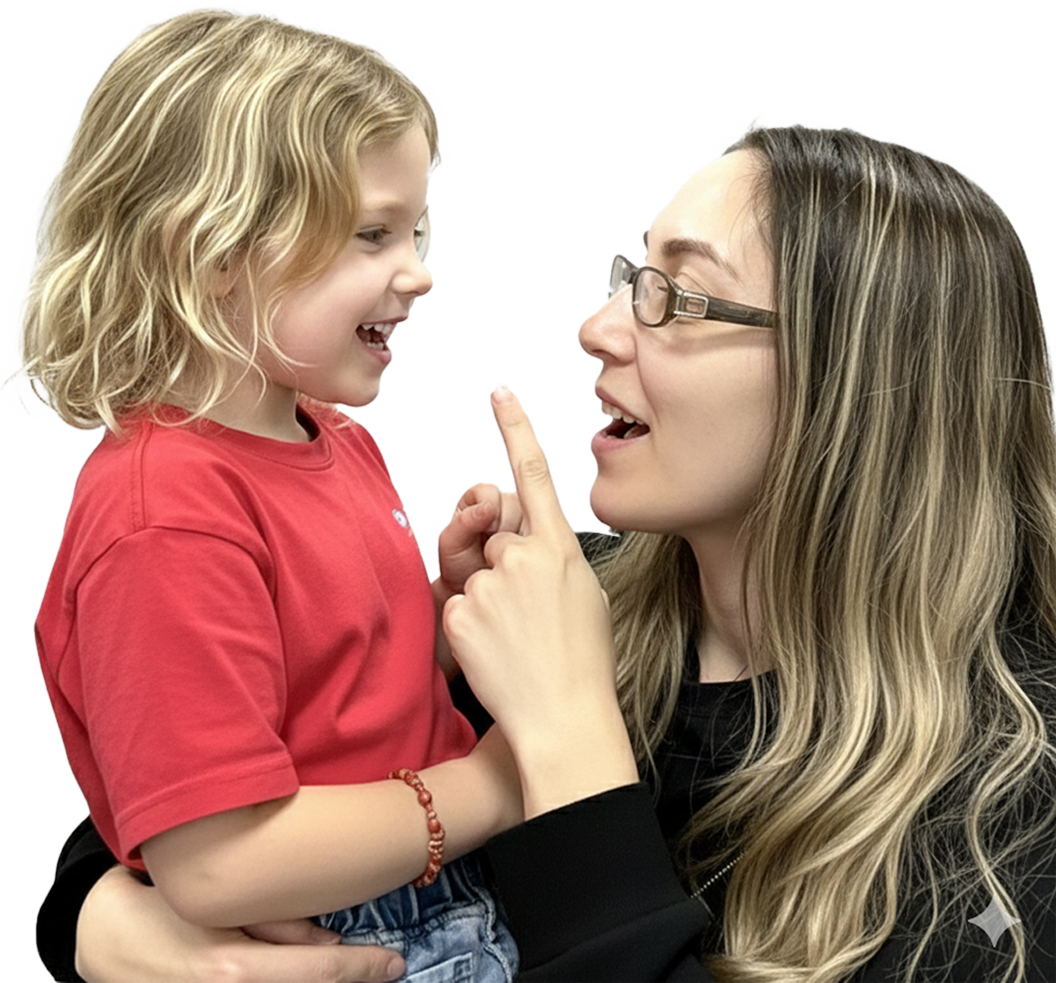
Expert speech, language and feeding therapy for children in Singapore - backed by 20+ years of experience and a warm, multidisciplinary team on Orchard Road.
Numbers That Matter
Experienced Team
AHPC-registered therapists with deep specialisation
Thorough Assessments
We understand the root before we plan the route
Results Driven
Clear goals, regular reviews, measurable outcomes
Collaborative Approach
Your whole family is part of the therapy journey
Expert Care Where Your Child Needs It Most
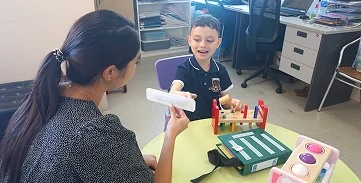
Speech & Language Therapy
From first words to fluent conversation - our speech-language therapists work with children across the full spectrum of communication challenges.
- Late talkers & speech delays
- Pronunciation & articulation
- Stuttering & fluency disorders
- Language & literacy skills
- Find their voice - AAC for non-verbal children
- Bilingual support - English, Mandarin, French & more
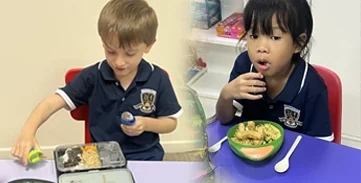
Feeding & Swallowing Therapy
Mealtime challenges affect the whole family. Our specialists support children with oral motor difficulties, sensory sensitivities, and complex feeding needs.
- Oral motor skill development
- Sensory-based food refusal
- Tube feeding transition support
- Safe swallowing - address choking, gagging, aspiration
- Fussy eaters - build positive mealtime experiences
- Family coaching - practical strategies for home
All the Support Your Child Needs. Under One Roof.
Most speech therapy clinics in Singapore work in isolation. At Dynamics, your child's Speech Therapist is part of a 35-person multidisciplinary team - so if an OT, psychologist, or educational therapist is needed, the handoff is seamless. No re-telling your story. No conflicting advice. One team, one plan.
"More Confident. More Fluent."
Verified Google reviews from parents whose children have worked with our Speech and Feeding team.
My child is more confident, more fluent in speech and stronger in writing skills after sessions with Ms Melanie (Speech Therapist) and Ms Shermin (Educational Therapist).
My kids really enjoy their sessions. They are always excited to attend, which says a lot about how engaging and fun the therapists are.
My son has been participating in Speech Therapy for about 1 year and has made good progress. He always looks forward to his sessions, and the therapists are not only professional but also genuinely caring.
Clear Fees. No Surprises.
Speech therapy sessions start from S$210 per 60-minute session (all our speech therapists are senior-level). Our multi-session packages include a discount for the best value on ongoing care; single sessions stay available for flexible, à la carte scheduling.
10% off · Save S$210
Figures above are starting rates for in-clinic senior speech therapy. Home-based and school-based sessions are available for an additional travel fee.
Worried About Your Child's Speech or Eating?
Don't wait for it to "resolve on its own." Early intervention is the single biggest factor in outcomes. Book a free 20-minute consultation and we'll help you figure out the right next step - even if that's not therapy with us.
Need speech therapy for an adult (stroke recovery, Parkinson's, voice disorders)? Visit our Adult Speech Therapy page →
Book Your Free 20-Min Consultation
A 20-minute call with our team - no cost, no obligation.